

Background
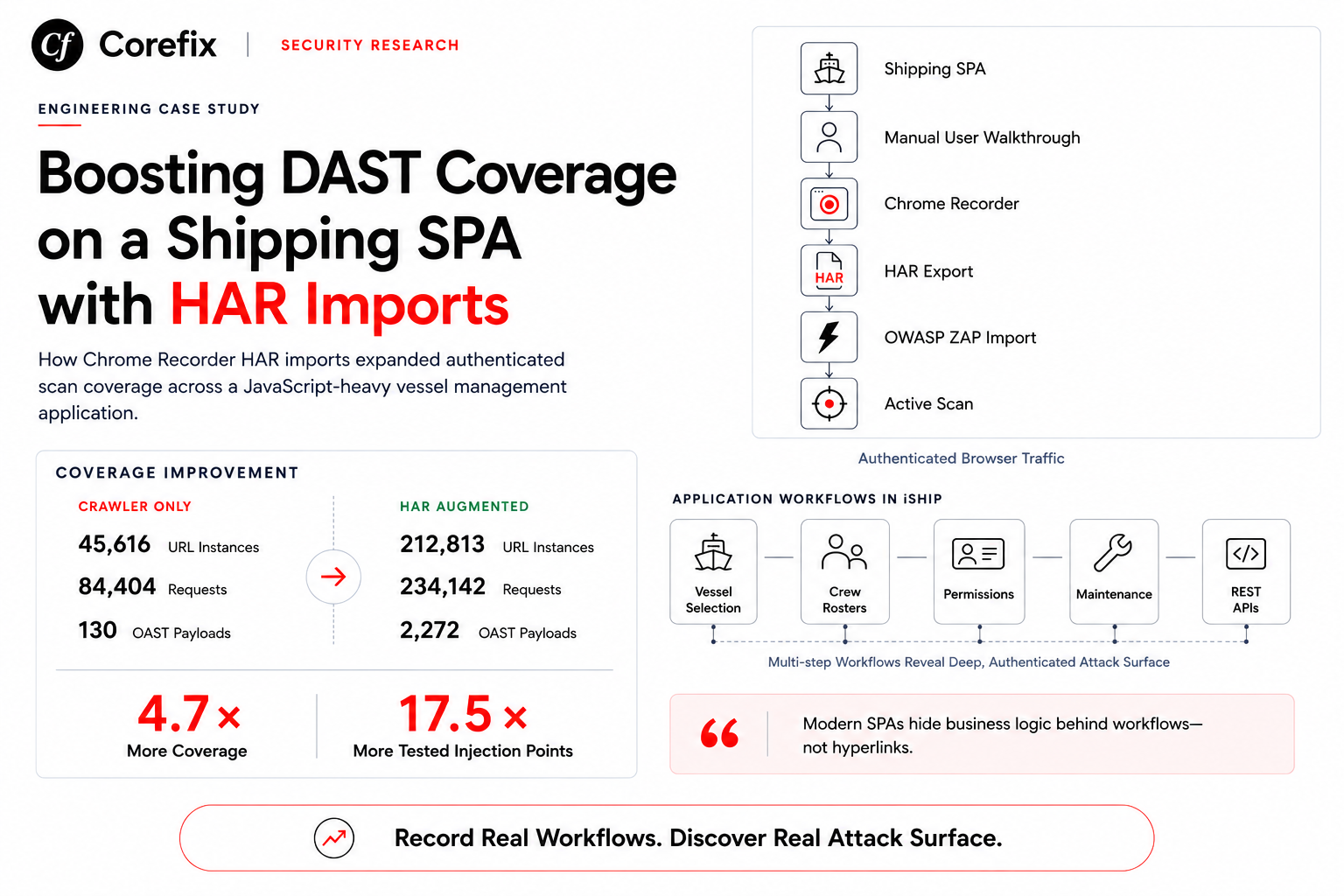
We run OWASP ZAP automation-framework scans against a shipping/vessel management SPA (demo-oq.ishipplus.cloud) built on a JS-heavy AJAX frontend with a JSON REST API backend. Like most SPAs, meaningful application state — vessel selection, crew rosters, permission screens, filtered lists — sits behind multi-step interaction sequences rather than plain hyperlinks.
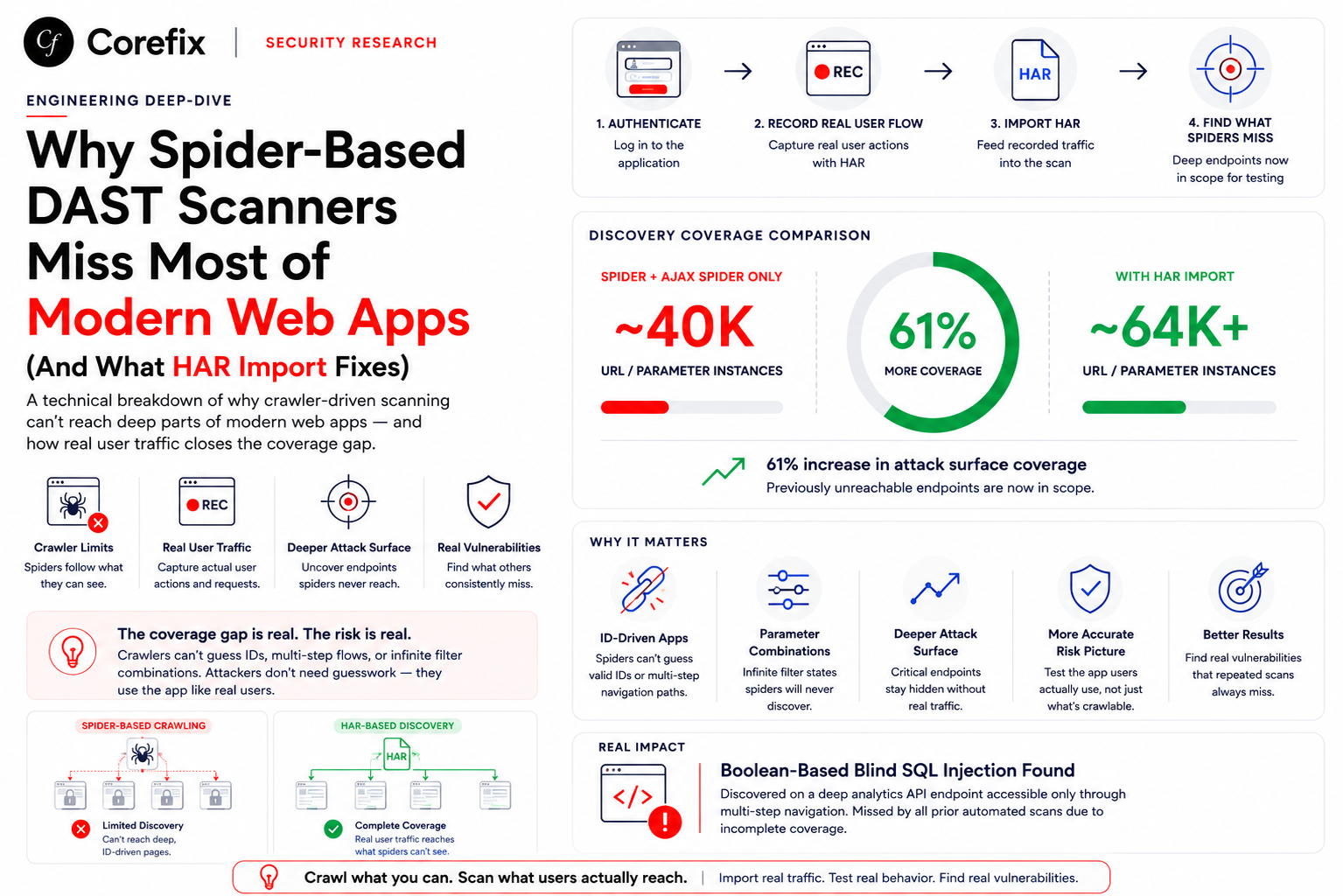
ZAP's built-in Spider and AJAX Spider are good at discovering URLs by crawling links and firing DOM events, but they have no concept of business logic. They don't know that viewing a crew history requires selecting a vessel first, or that a permissions table only loads after a specific designation is clicked. On JS-heavy SPAs, this caps how much of the real application a spider can ever reach on its own.
The Change: HAR Import via Chrome's Built-in Recorder
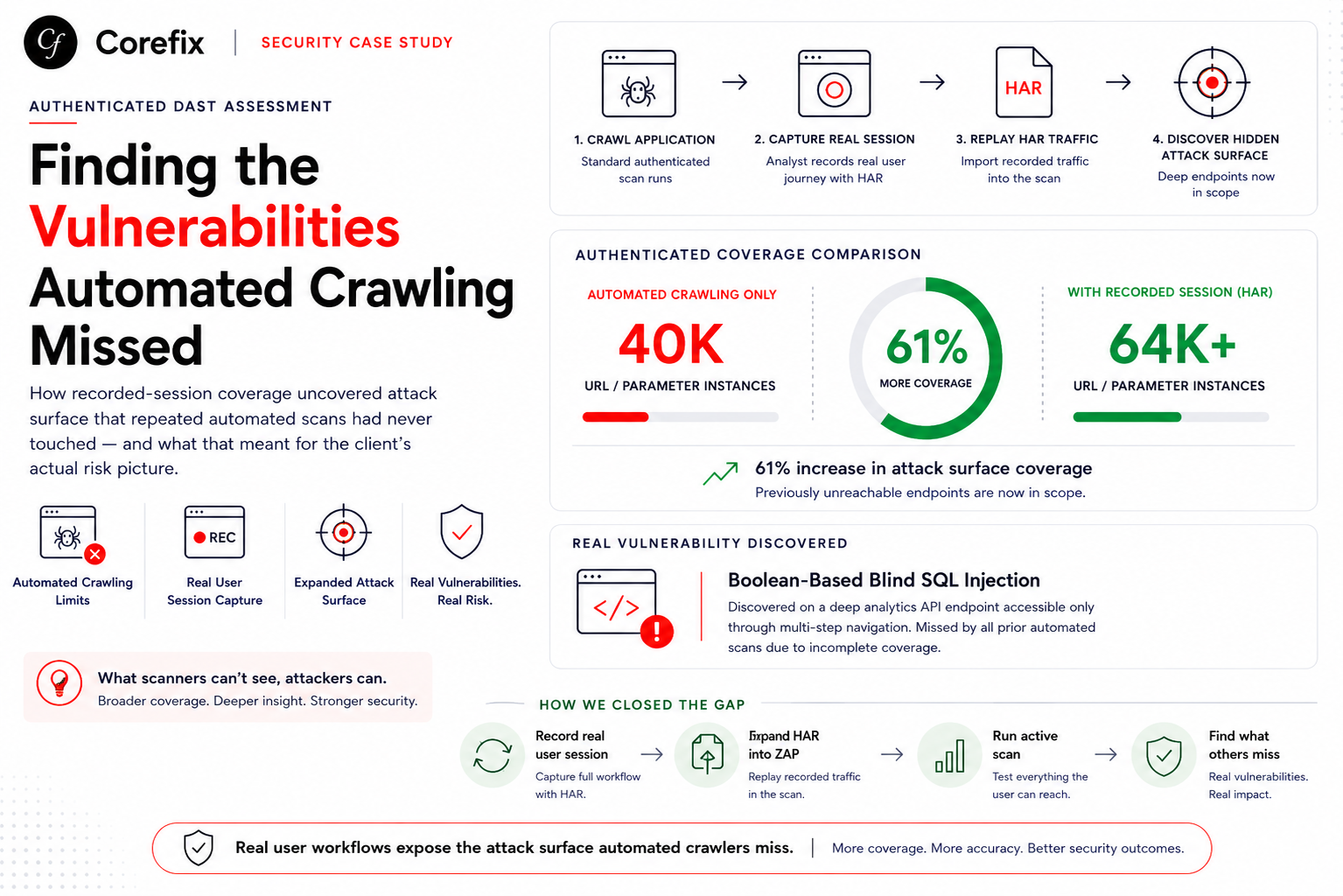
Instead of relying solely on the AJAX Spider for discovery, we recorded a full manual walkthrough of the application using Chrome DevTools' native Recorder — no custom scripts, no bespoke crawler, no additional authentication scripting beyond what the scan already used. The exported HAR file was fed into ZAP as an import job ahead of the active scan.
That's the entire setup change. Everything else — authentication config, session handling, active scan policy — stayed the same.
What the HAR Import Captured
Total HAR URLs collected: 1109
Unique URLs: 286
Unique paths: 230
stats.exim.importer.har.count: 537
stats.auto.job.import.run: 45537 real, browser-executed requests were imported across 45 batches — every one of them a request the application actually made during genuine authenticated use, including AJAX/API calls a spider would otherwise have to accidentally stumble into by chance.
Coverage: Before vs. After
| Metric | Automated crawl only (best run) | HAR-augmented run | Change |
|---|---|---|---|
Active scan URL-instances (stats.ascan.urls) | 45,616 | 212,813 | ~4.7x |
| Successful network requests sent | 84,404 | 234,142 | ~2.8x |
| OAST (out-of-band) payloads generated | 130 | 2,272 | ~17.5x |
| Active scan total time | ~50 min | ~127 min | scales with coverage |
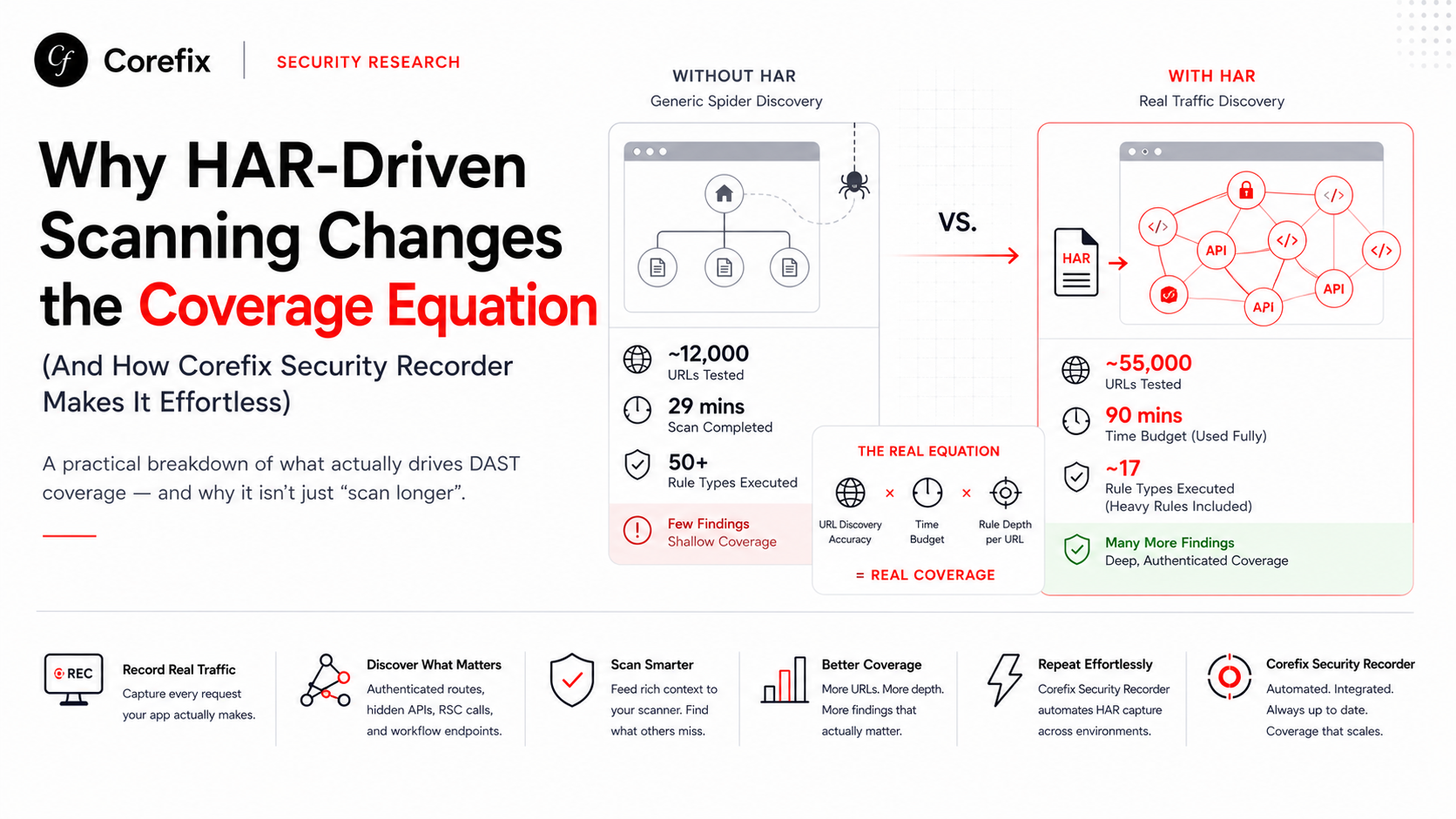
The OAST payload jump is the most telling number. Out-of-band payloads are generated for blind/async vulnerability classes — blind SQLi, SSRF, blind command injection — that only get tested when the scanner actually reaches the injectable parameter in the first place. A 17.5x increase in OAST payloads means the scan found and tested vastly more real injection points than crawling alone ever surfaced, because those parameters live behind interaction sequences a spider doesn't naturally trigger (filtering a vessel list, expanding a crew roster, updating a designation's permissions, etc.).
Why This Works Especially Well on SPAs
The AJAX Spider simulates clicks and DOM events, but it's fundamentally guessing. It has no model of the application's business rules — it can't know that a permissions API only returns data after a designation is selected from a dropdown that itself only appears after a role filter is applied. A human walking through the app once, doing exactly what a real user does, sidesteps this problem entirely. The HAR capture is a verbatim record of legitimate application state transitions — no reverse-engineering required.
In other words: the harder an app is for a spider to model, the more a five-minute manual HAR recording is worth.
An Honest Caveat
Scope wasn't perfectly identical between the two runs compared above — several excludePaths for RBAC/permission endpoints were added in the HAR-augmented run. So the full 4.7x jump in URL-instances isn't attributable to HAR import alone. That said, the HAR import numbers (537 imported entries, 45 import jobs) are large, directly measurable, and the qualitative shift — dramatically more OAST payloads reaching real injectable parameters — lines up exactly with what you'd expect from filling in the gaps a spider misses on a JS-heavy SPA.
Takeaway
A single manual walkthrough recorded through Chrome's stock Recorder — zero custom tooling, zero extra scripting — surfaced roughly 4.7x more scannable URL-instances and ~17.5x more tested injection points than automated crawling alone on this AJAX-heavy application. The cost was proportionally longer scan time (not a stall — the numbers scale together), which is a reasonable trade for meaningfully deeper coverage of real application logic.
Practical recommendation: for any SPA where core functionality is gated behind multi-step flows, pair your DAST spider with a short manual HAR recording before the active scan. It's minutes of manual effort for a large, measurable jump in real coverage.